
If your once-green lawn is turning patchy and yellow, you might be looking at more than just a watering issue. Harvester termites — particularly the Hodotermes mossambicus species — are a common sight across South Africa’s grasslands, farms, and residential gardens.
Unlike the wood-eating subterranean termites that damage homes, harvester termites feed on dry grass, flourishing lawns, roots, and organic matter, which makes them a major nuisance for homeowners and landscapers. These small but determined pests work in large colonies and can strip an entire patch of turf overnight.
These destructive termites start with flight holes, which are interconnected underground, and they start in small circular patches to start damaging one’s lawn.
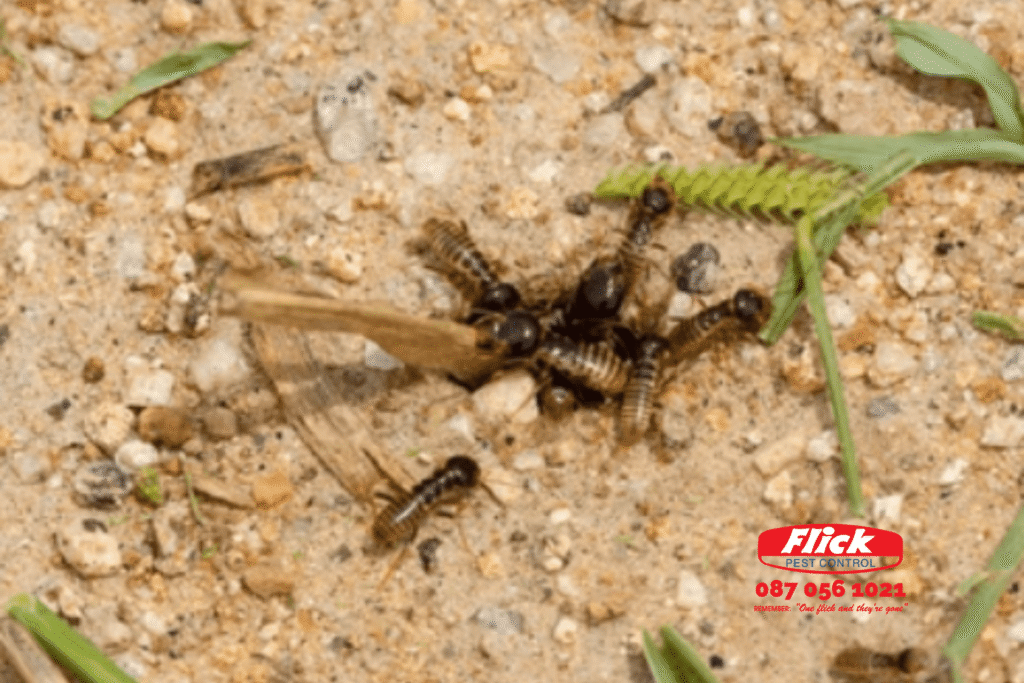
Harvester termites thrive in warmer, semi-arid regions, such as parts of Gauteng, North West, Limpopo, and the Free State, but they can also appear along the coast. Their underground nests and foraging tunnels make them difficult to detect until the damage is visible.
They’re most active after summer rains, when soil is soft and vegetation is plentiful. They are also active during sunny winter days when its warm and dry on the highveld too, so they can be a year-round pest. In suburban gardens, they’ll move into lawns, flowerbeds, and even the roots of shrubs or ornamental plants.
How to Identify an Infestation
You might have harvester termites if you notice:
- Yellowing or bare patches in your lawn that spread quickly
- Small holes or soil runways across the surface
- Increased activity at night, especially after rain
- Winged termites (alates) emerging around light sources during humid evenings
Because their tunnels are underground, it’s easy to miss the early signs. By the time damage becomes visible, a large colony may already be established.
Why Harvester Termites Are a Problem
While these termites don’t eat wood or damage your home’s structure, they can:
- Destroy expensive landscaping and turf
- Cause erosion in gardens or sports fields
- Damage pasture and grazing areas on farms
- Compromise young plants and root systems, reducing plant health
In short, they can turn your carefully maintained outdoor space into dry, uneven patches in a matter of days.
Prevention and Control
The best defence against harvester termites is early detection and consistent maintenance. Here are a few practical steps:
- Keep lawns and plants healthy — stressed or dry vegetation attracts termites.
- Avoid over-watering or creating damp patches that encourage tunnelling.
- Inspect your garden regularly, especially after heavy rains.
- Call a licensed pest control technician if you spot unusual soil runways or rapid lawn die-off.
Flick Pest Control’s local technicians use targeted treatments designed for the South African climate, ensuring minimal disruption to your garden while eliminating the problem at its source.
Conclusion:
Harvester termites might be small, but the impact they have on lawns and gardens is anything but. Their silent underground activity can quickly undo months of hard work — so if you’ve noticed signs of damage, don’t wait until it spreads.
Contact Flick Pest Control today for expert advice and effective termite treatment solutions that protect your outdoor space all season long.
Remember “One Flick and They’re Gone”
Give us a ring on 087 056 1021, drop us an email at enquiries@flickpest.co.za or drop us a comment on our blog or social media platforms.